
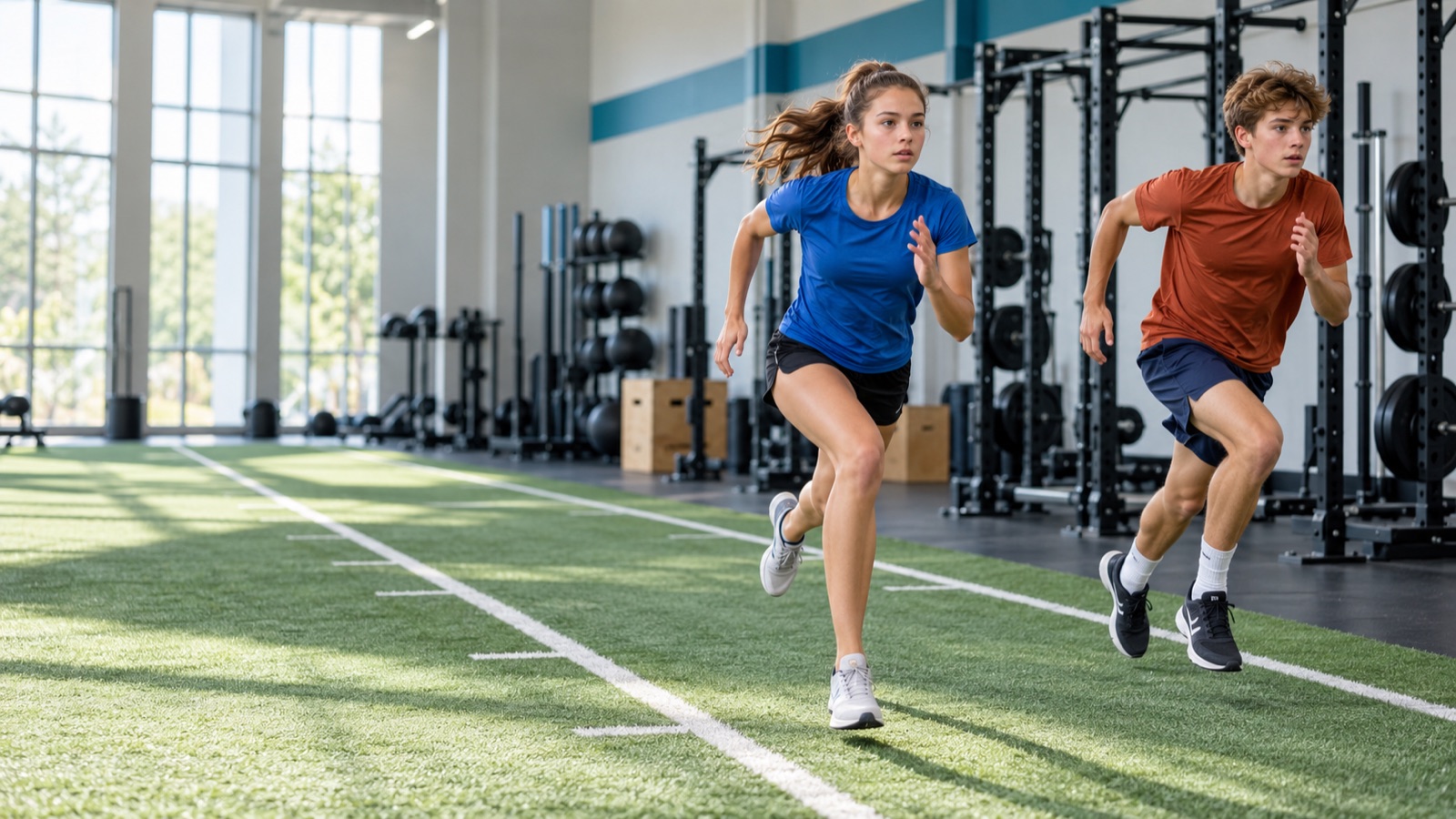
Strength and power for your event.
Track and field training in Glen Mills for sprinters, hurdlers, jumpers, and throwers. Build strength, power, and movement control to support your event.
Why Track Athletes Need Strength Work
Every event has its own physical demands.
Build a strength program that supports the work you do on the track and in the field.
Sprinting, jumping, and throwing require different combinations of strength, power, coordination, and mobility. A structured training plan develops these qualities while accounting for event technique, practice volume, and competition timing.
Our track and field training in Glen Mills connects these priorities with an individualized plan for athletes from Chadds Ford, West Chester, and nearby communities. It is part of our broader sports performance training approach, with coaching adapted to the athlete and the season.
Who This Is For
For athletes developing the foundation behind their event.
Programs reflect event group, training experience, and the school or club calendar.
- Sprinters and hurdlers building strength and acceleration
- Jumpers developing power and landing control
- Throwers building lower-body and rotational strength
- School and college athletes seeking coached offseason training
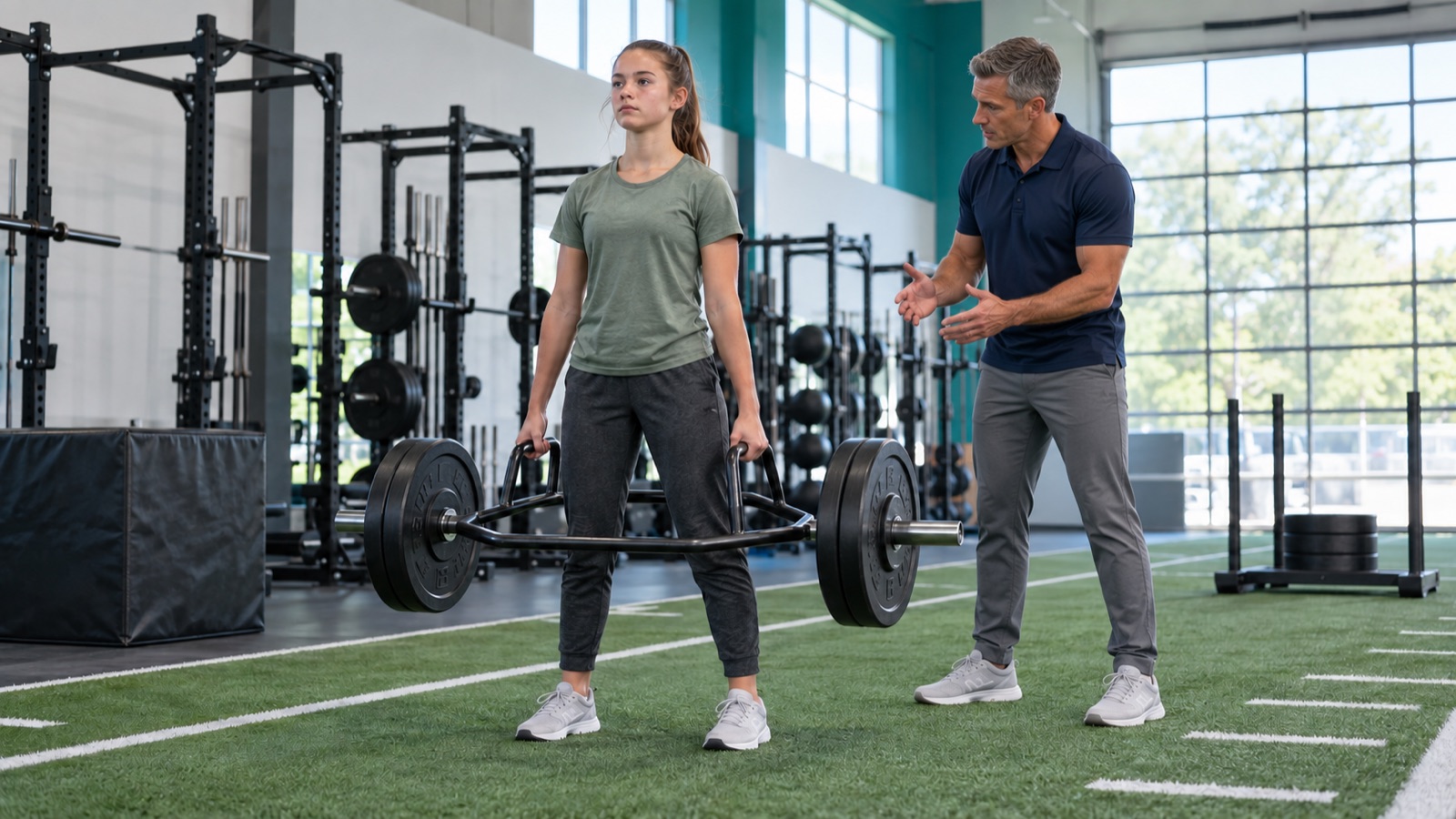
The Align Approach
Track and field strength and conditioning by event group.
Sessions combine purposeful exercise selection, hands-on coaching, and progressions matched to the athlete.
Foundational strength
Squats, hinges, split squats, and carries develop strength through the legs and trunk. Loading is matched to technique, experience, and the demands of the athlete’s event.
Power and coordinated movement
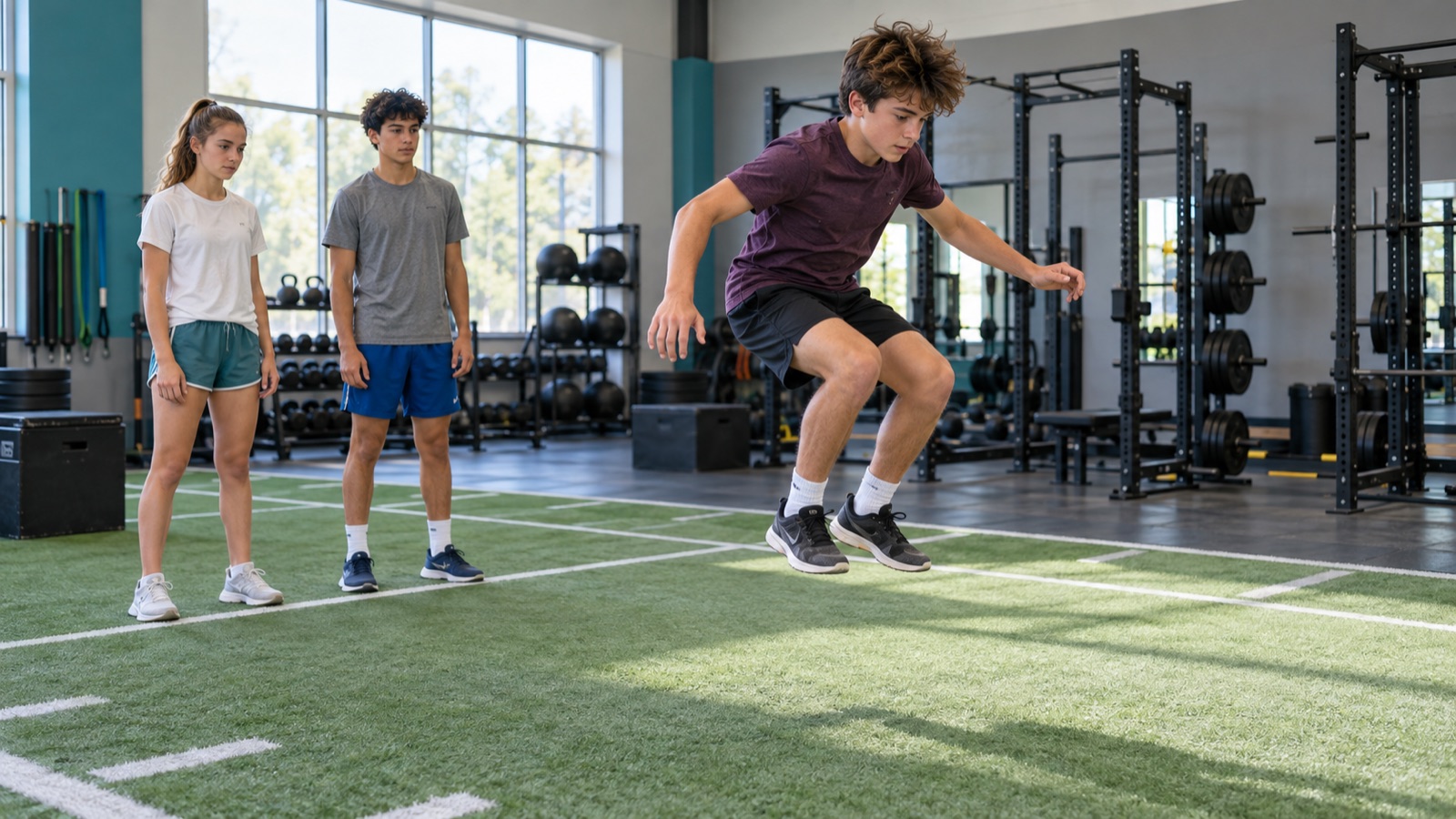
Jumps, bounds, and medicine-ball exercises help athletes practice producing force with control. Volume and exercise difficulty are adjusted around event practice.
Support for sprint demands
Posterior-chain strength and appropriately progressed speed work complement the athlete’s track program. Coaches account for total running volume and recovery before adding work.
Training Priorities
What track and field training in Glen Mills focuses on
The emphasis depends on the athlete’s assessment, goals, and current practice and competition demands.
What we prioritize
- Lower-body strength matched to the event
- Acceleration and sprint-support exercises
- Jumping, bounding, and controlled landings
- Single-leg strength and balance
- Trunk strength and rotational power for throwers
How It Works
A clear plan from the first conversation.
We begin with your goals, training history, and schedule, then build a program that can develop over time.
Consultation and movement assessment
We discuss goals, training experience, practice and competition schedules, and relevant health history. Coached movement tasks help guide exercise selection and starting levels.
A plan around your season
The program follows indoor, outdoor, and offseason priorities. Gym workload is adjusted around meets and the sessions planned by the athlete’s event coach.
Coached progression
Exercises, resistance, and complexity progress as technique and capacity improve. Coaches adjust the plan using the athlete’s response and available recovery.
Review and refine
We review relevant strength and power measures alongside competition results and the athlete’s feedback. Event performance depends on several factors, so progress is considered in context.
Related Training
Part of a complete sports performance plan.
Our track and field program is part of sports performance training at Align Fitness. Explore related programs or talk with a coach about the right starting point.
FAQ
Questions athletes and families often ask.
Do programs differ for runners, jumpers, and throwers?
Yes. The foundation may overlap, but exercise selection, power work, loading, and conditioning reflect the demands of each event and the athlete’s experience.
Can athletes strength train during the season?
Yes. Training volume and session timing can be adjusted around meets and event practice. The aim is to support the season while allowing adequate recovery.
What if an athlete has a recurring hamstring injury?
Recurring pain or an active injury should be evaluated by a qualified healthcare professional. After clearance, training follows that guidance and takes current strength, running exposure, and recovery into account. For background, see AAOS information on hamstring injuries.
Is strength training suitable for distance runners?
It can be part of a distance runner’s broader program. The plan should reflect running volume, training experience, and goals rather than automatically copying a sprinter’s or thrower’s routine.
Glen Mills & Downingtown
Start track and field training in Glen Mills.
Tell us about your goals, training experience, and season schedule. A consultation is the first step toward a plan that fits your athlete.
Glen Mills, PA 19342
Serving Glen Mills, Chadds Ford, West Chester, Delaware County, Chester County, and nearby communities.
Phone 484-402-6477